
The Religious Trauma Treatment Model™ (RTTM)
The Book and Its Clinical Applications
A religious pendant swings from a rearview mirror. Someone offers a casual blessing at dinner. A bell drifts from a building nearby and the body reacts before the mind can catch up. Heart rate climbs. Muscles brace. Breath tightens. Most people have no words for what just happened in their body. They learn to ignore it, explain it away, or blame themselves for feeling it at all.
This is religious trauma. It is not a misinterpretation of faith, a crisis of meaning, or a failure of resilience. It is identity level harm, created by high control religious systems that condition fear, obedience, and self surveillance directly into the nervous system. For decades it has gone unnamed in clinical settings. Clients get treated for anxiety, depression, shame, or relational difficulty while the religious conditioning underneath those symptoms goes untouched, because neutrality toward religion, theological illiteracy, and spiritual bypass have let that harm persist inside therapy itself.
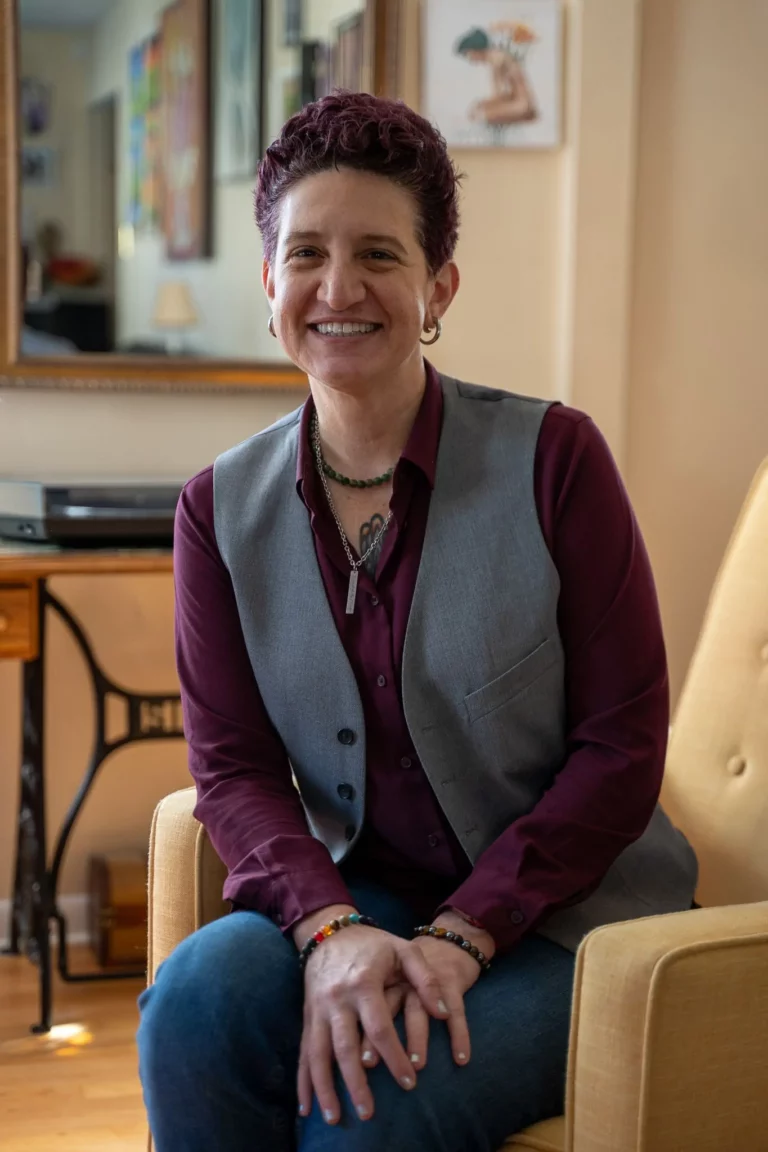
I am Ann Russo, LCSW, MA Theology. I built the Religious Trauma Treatment Model out of two decades of clinical practice and study, and out of my own life. I grew up in a queer family in an era and a place where that made us a target, and religion gave people permission to threaten us. I know what it is to hide the truth of your life to survive it, and I know what it costs to eventually stop. That history is in every page of this work. RTTM integrates trauma science, psychology, neuroscience, and theology so that therapy can interrupt this kind of harm instead of quietly repeating it.
RTTM in Practice and Education
- I provide psychotherapy informed by RTTM for adults impacted by religious trauma, spiritual abuse, and faith based harm. Treatment focuses on how religious control has trained the body, constrained identity, and distorted relational safety, delivered through licensed, trauma informed, evidence based clinical care.
- RTTM is also taught to mental health professionals through training and educational programs, equipping clinicians to recognize religious trauma, understand how it works, and avoid reenacting religious control dynamics inside the therapeutic relationship itself.
- Training supports ethical integration of RTTM into independent clinical practice. Completion of training does not grant certification, endorsement, or authority to teach the model.
- My forthcoming book, Treating Religious Trauma: An Integrative Framework for Clinicians, published by PESI, lays out the clinical foundations of RTTM and makes the case that religious trauma is real, common, and treatable.
If you’ve ever felt alone in the therapy room—or unsure how to help a client whose wounds are wrapped in religion—this book is your guide.
Healing from religious trauma shouldn’t feel like heresy.
About the Book
Clients almost never walk into a session and say “I have religious trauma.” They say they can’t be intimate with their partner. They say the guilt won’t let up. They say they’re terrified of disappointing people they love. That’s the presenting concern, a signal pointing toward something the client doesn’t yet have language for, and something most clinicians were never trained to see.
Treating Religious Trauma: An Integrative Framework for Clinicians gives clinicians that language and that structure. It traces how moral injury and loss of autonomy organize the nervous system, identity, and relational life long after belief itself shifts, and it introduces RTTM as a sequenced model of care built around six clinical domains: Regulate, Educate, Clarify, Align, Practice, and Sustain. Full clinical case studies walk through how guilt, shame, fear of divine punishment, sexual repression, and moral pressure function as organizing themes, not symptoms to treat one at a time. Nothing in this model asks a client to resolve their faith before they can heal, or to land anywhere in particular. Clients stay, leave, or hold pieces of it without deciding, and RTTM meets them exactly there.
This is a clinical book, but it did not come from theory alone. It came from years in the therapy room and from my own life inside and outside religion. That is why it also speaks past the clinical audience, to anyone who has felt that unnamed weight and wondered whether they were the problem, or whether the system was.
Treating Religious Trauma: An Integrative Framework for Clinicians publishes with PESI in March 2027, with preorders opening in February 2027. Join the waitlist for release updates and related professional resources.